Whether you have inquiries about our services, need a customized solution, or wish to discuss a potential project, our team is here to assist you.
PHED Water Supply Projects
PHED Water Supply Projects
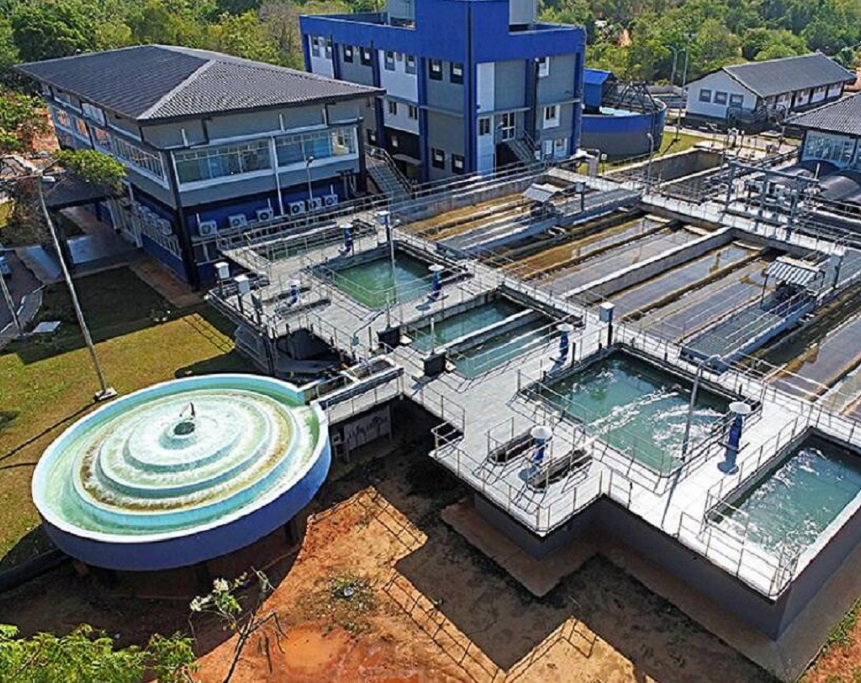
What It Is: These are the projects that are part of the government programs for clean drinking water to reach every household through a network of pipelines and water supply systems.
How It's Done: The development process starts with the identification of water source to dig suitable borewell, construction of overhead reservoirs, the planning of the distribution network, including laying pipelines, establishing reservoirs, and installing water meters. The engineers survey the area, design the pipeline routes, and select appropriate materials such as HDPE, MS, and CI pipes. Constructions are basically carried out by trenching, laying pipes, and connecting them with water sources and distribution points.
In larger schemes, larger Pumping stations are constructed to cater to supply to multiple villages or town areas. The system is put through rigorous testing before induction into use so as to ensure the constant supply of water at each household connected with it and ensure there is no leakages which would otherwise lead to contamination.
related projects
Regions of Successful Projects
Brief Overview:
In Nonhi, Jehanabad, we have successfully executed three comprehensive water supply schemes, designed to provide clean drinking water to the local community. The schemes feature a robust water distribution network, comprising approximately 4875 meters of C.I and G.I pipes. This network ensures efficient water distribution, enabling around 20+ households to access tap water. As a result, these households have experienced significant improvements in their overall quality of life, with access to a reliable source of clean drinking water.
Brief Overview:
In Waina, Jehanabad, we have successfully implemented three comprehensive water supply schemes, designed to provide clean drinking water to the local community. The schemes feature a robust water distribution network, comprising approximately 4000+ meters of C.I and G.I pipes. This network ensures efficient water distribution, enabling around 20+ households to access tap water. As a result, these households have experienced significant improvements in their overall quality of life, with access to a reliable source of clean drinking water.
Brief Overview:
In Maharajpur, Purnea, we successfully implemented seven comprehensive water supply schemes, ensuring a reliable source of clean drinking water for rural households. The project involved the installation of over 32,000 meters of HDPE pipes, which served as the backbone of the water distribution network.
A crucial component of the project was the installation of a 16 KLPH Iron Removal Plant (IRP). This state-of-the-art water treatment plant is specifically designed to address high iron content in raw water sources, making it an ideal solution for communities in need of clean drinking water. With a treatment capacity of 16,000 liters per hour, the IRP's advanced technology ensures efficient iron removal, resulting in water that meets or exceeds international drinking water standards.
Through this project, we were able to provide clean drinking water to households in rural areas, significantly improving their quality of life. The successful implementation of these water supply schemes demonstrates our commitment to ensuring access to clean drinking water for all communities.
Brief Overview:
We successfully implemented three comprehensive water supply schemes in Amour, Purnea, providing rural households with a reliable source of clean drinking water. The project involved installing over 10,000 meters of HDPE pipes, forming the backbone of the water distribution network. A critical component of the project was the installation of a 16 KLPH Iron Removal Plant (IRP). This state-of-the-art water treatment plant is designed to address high iron content in raw water sources, making it an ideal solution for communities in need of clean drinking water. With a treatment capacity of 16,000 liters per hour, the IRP's advanced technology ensures efficient iron removal, resulting in water that meets or exceeds international drinking water standards.
Brief Overview:
The rural water supply schemes under Bihar's Har Ghar Jal Mission Yojna aim to provide clean drinking water to rural households. These schemes supply water to over 500 households across different villages through a 3246-meter pipeline connected to electric-driven borewell pumps. The water is treated to remove impurities, making it potable and safe for consumption.
This initiative is part of the Jal Jeevan Mission, a flagship program of the Government of India that seeks to provide safe and adequate drinking water to every rural household.
Brief Overview:
We have successfully completed the supply, installation, and commissioning of a 315 KVA Transformer in Maujampur Ara, Bhojpur, as part of our comprehensive electrical infrastructure development project. This project involved the design, procurement, installation, and testing of the transformer, as well as the construction of associated electrical infrastructure. The newly installed transformer is designed to provide a reliable and efficient source of power to the local community, supporting the growth and development of the region.
Pipe Laying Projects
Pipe laying, in general, is a process for laying pipelines that would carry water, sewage, gas, or other fluids from one point to another.
How It's Done:
Detailed planning is done, and the survey of the area has to be done, and the pipeline route is designed. Depending upon the project requirement, the type of pipe HDPE, MS, CI, and DI is decided. Trenching is done by laying the pipes along the designed route, connecting them, and securing them in place. Depending on the type of pipeline, protective measures may be added to the encasing of the pipes in concrete. Testing of the pipeline for leaks and pressure integrity is done before it is buried and the site is restored
Pipe Laying Projects
Pipe laying, in general, is a process for laying pipelines that would carry water, sewage, gas, or other fluids from one point to another.
How It's Done:
Detailed planning is done, and the survey of the area has to be done, and the pipeline route is designed. Depending upon the project requirement, the type of pipe HDPE, MS, CI, and DI is decided. Trenching is done by laying the pipes along the designed route, connecting them, and securing them in place. Depending on the type of pipeline, protective measures may be added to the encasing of the pipes in concrete. Testing of the pipeline for leaks and pressure integrity is done before it is buried and the site is restored